
The Python Programming Guide is the perfect starting point for anyone interested in coding, technology, robotics, artificial intelligence, or software development. Python is one of the most popular programming languages in the world because it is easy to learn, powerful, and versatile.
In this Python Programming Guide, you’ll learn what Python is, why it was created, its real-world applications, how to install Python and Thonny IDE, and how to write your first Python program.
Table of Contents
What is Python?
Python Programming Guide Introduction
Python is a programming language that helps humans communicate with computers. Since computers cannot understand human languages directly, programmers use coding languages such as Python, C, C++, and Java to provide instructions.
Think of Python as a bridge between humans and machines. It translates commands into a format that computers can understand and execute.
Python is known for its simple syntax, making it one of the easiest programming languages for beginners.
History of Python
Python Programming Guide History
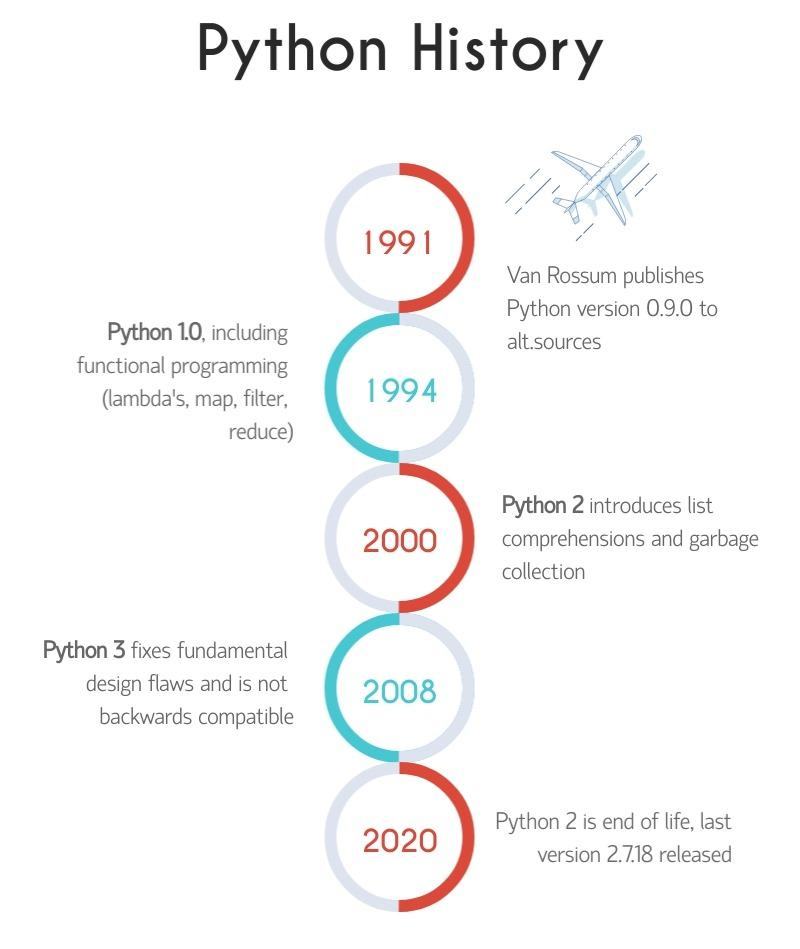
Python was created by Guido van Rossum and officially released in 1991.
The goal was to create a programming language that was easy to read and write, similar to reading a storybook. This philosophy helped Python become one of the most beginner-friendly languages in the world.
Interestingly, the name “Python” was inspired by the comedy television show Monty Python’s Flying Circus, not by the snake.
Key Facts
- Creator: Guido van Rossum
- First Release: 1991
- Language Type: High-Level Programming Language
- Famous For: Simplicity and readability
Why Learn Python?

Python Programming Guide Benefits
Python is often recommended as the first programming language for students and beginners.
Benefits of Learning Python
- Easy to learn and understand
- Beginner-friendly syntax
- Large global community
- Used by major companies
- Supports multiple technologies
Many leading organizations use Python for software development, automation, artificial intelligence, and data science.
Companies Using Python
- NASA
- Netflix
- Spotify
- Dropbox
Learning Python also improves logical thinking and problem-solving abilities.
Amazing Things You Can Build with Python
Image Alt Text: Python Programming Guide Applications
One of the biggest advantages of Python is its versatility.
1. Video Games
Python can be used to create interactive games with graphics, levels, and animations.
2. Robotics
Robots can be programmed using Python to perform tasks and respond to sensors.
3. Websites
Frameworks such as Django and Flask make web development easier.
4. Artificial Intelligence
Python is one of the most widely used languages in AI and machine learning projects.
5. Data Visualization
Python can generate charts, graphs, and reports from large datasets.
6. Mobile Applications
Developers can build cross-platform mobile apps using Python frameworks.
7. Chatbots
Python powers intelligent chatbots used by businesses and websites worldwide.
Installing Python and Thonny IDE
Image Alt Text: Python Programming Guide Thonny IDE Installation
Before writing code, you need to install Python and a coding environment.
Step 1: Install Python
Download Python from:
Step 2: Install Thonny IDE
Download Thonny from:
Thonny is designed specifically for beginners and provides an easy way to write and run Python programs.
Supported Platforms
- Windows
- macOS
- Linux
Your First Python Program
Image Alt Text: Python Programming Guide Hello World Program
Every programmer starts with the famous “Hello World” program.
print("Hello World")
The print() function displays text on the screen.
You can also print your own information:
print("My Name is John")
print("My Favorite Color is Blue")
Running these commands in Thonny will immediately display the output.
RoboSiddhi Learning Experience
This Python lesson was introduced during a RoboSiddhi coding session designed for beginners.
Students learned:
- What Python is
- Why Python is important
- Python history
- Installing Python software
- Installing Thonny IDE
- Writing the first program
The session focused on building confidence and making coding enjoyable for new learners.
Practical YouTube Tutorial
For practical learning, watch beginner-friendly tutorials on:
- Python for Beginners
- Python Installation Guide
- Thonny IDE Tutorial
- Python Hello World Program
- Python Basics Course
Video tutorials help learners understand coding concepts through hands-on demonstrations.
🚀 Full Course: Python in English (Beginner to Advanced)
Future Learning Path
After learning the basics, students can move on to:
Variables
Store and manage data efficiently.
Mathematical Operations
Perform calculations and solve problems using Python.
Conditional Statements
Create decision-making programs using if-else logic.
Loops
Repeat actions automatically.
Functions
Organize and reuse code effectively.
These concepts form the foundation of advanced programming.
Conclusion
This Python Programming Guide introduced the fundamentals of Python, including its history, advantages, applications, installation process, and first program. Python continues to be one of the most popular programming languages because of its simplicity, versatility, and powerful capabilities.
Whether you want to build websites, robots, games, AI applications, or data-driven projects, Python provides an excellent starting point. Begin with simple programs, practice regularly, and gradually explore advanced topics to become a confident programmer.