
Learn Grade 5 STEM activities with a Simple Electrical Circuit project. Explore LEDs, coin cell batteries, jumper wires, closed circuits, electricity flow, and beginner electronics through hands-on STEM learning.
Grade 5 STEM Activities: Simple Electrical Circuit Project
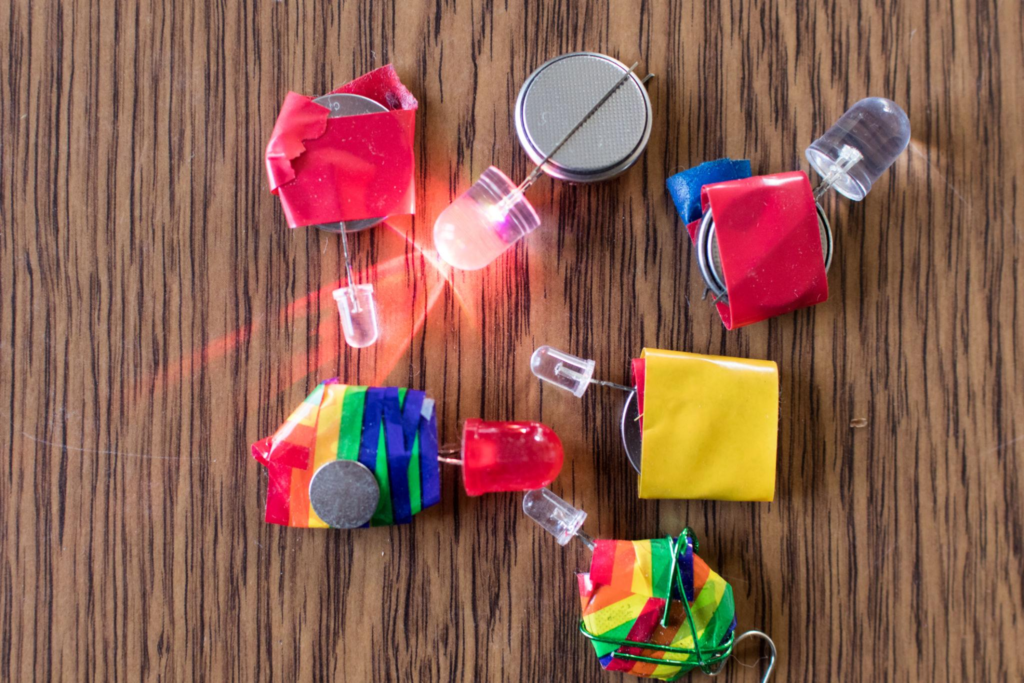
STEM education helps students understand science and technology through practical experiments and hands-on activities. In this exciting Grade 5 STEM Activities project, students will learn how to create a Simple Electrical Circuit using an LED, jumper wires, and a coin cell battery.
This beginner-friendly electronics activity teaches students:
- Basics of electricity
- Simple electrical circuits
- LED working principles
- Battery connections
- Closed circuit concepts
- Electrical wiring basics
- Real-world electricity systems
The project helps students understand how electricity flows from a power source to devices like bulbs and LEDs.
What is a Simple Electrical Circuit?
A Simple Electrical Circuit is a closed path through which electricity flows.
When all components are connected properly:
- Electricity travels from the battery
- Passes through the LED or bulb
- Returns back to the battery
- The LED glows
If the circuit is broken, electricity cannot flow.
| Component | Purpose |
|---|---|
| LED (Light Emitting Diode) | Produces light when electricity flows |
| Coin Cell Battery | Supplies electrical energy |
| Jumper Wires | Connect circuit components |
| Battery Holder (optional) | Holds the battery safely |
Components Required for the Project
Understanding the LED
An LED (Light Emitting Diode) is a small electronic light source.
The LED has two terminals:
| LED Terminal | Function |
|---|---|
| Positive Leg (+) | Connects to battery positive |
| Negative Leg (-) | Connects to battery negative |
When connected correctly, the LED glows brightly.

Understanding the Coin Cell Battery
The project uses a coin cell battery as the power source.
The battery has:
- Positive (+) terminal
- Negative (-) terminal
The battery provides electrical energy needed to light the LED.
How Electricity Flows in the Circuit
Electricity moves through a complete path called a closed circuit.
Working Process
- Battery supplies electrical energy
- Electricity flows through jumper wires
- Current reaches the LED
- LED glows
- Electricity returns to the battery
This complete loop allows the circuit to function properly.
Connecting the Simple Circuit
Students connect the circuit using jumper wires.
Circuit Connection Setup
| Component Connection | Description |
|---|---|
| Battery Positive (+) | Connected to LED positive leg |
| Battery Negative (-) | Connected to LED negative leg |
| Jumper Wires | Extend the circuit connections |
The LED lights up when all connections are correct.
Importance of Jumper Wires
Jumper wires help extend electrical connections.
In real life:
- Electricity travels long distances through wires
- Homes receive electricity using large electrical networks
- Appliances work because circuits are connected properly
This project helps students understand how household wiring works in a simple way.
What is a Closed Circuit?
A closed circuit means the electrical path is complete.
Closed Circuit
- Electricity flows normally
- LED turns ON
Open Circuit
- Path is broken
- Electricity stops flowing
- LED remains OFF
Understanding closed circuits is an important part of electronics and STEM learning.
Real-Life Applications of Electrical Circuits
Electrical circuits are used everywhere in daily life.
Home Lighting
Bulbs and lights work using electrical circuits.
Electronic Devices
Phones, computers, and TVs contain complex circuits.
Robotics Projects
Robots use circuits to control sensors and motors.
Industrial Machines
Factories use electrical systems for automation.

STEM Learning Benefits for Students
This Grade 5 STEM Activities project helps students:
- Understand basic electronics
- Learn how electricity flows
- Improve observation skills
- Explore engineering concepts
- Develop problem-solving abilities
- Build curiosity in science and technology
Hands-on activities make STEM learning easier and more enjoyable.
Grade 5 STEM Activities: Safety Instructions
While performing electrical activities:
- Use low-voltage batteries only
- Check wire connections carefully
- Avoid short circuits
- Keep batteries away from water
- Use adult supervision if necessary
Safety is very important during electronics experiments.
RoboSiddhi – Supporting STEM and Robotics Education
https://robosiddhi.shop/robotics-kits
RoboSiddhi provides robotics kits, sensors, STEM learning tools, coding boards, and educational electronics products for students and schools.
Students can explore:
- Robot kits
- Flame sensors
- Coding boards
- STEM learning materials
- DIY robotics projects
- Electronics components
RoboSiddhi helps children learn robotics through creative hands-on STEM education.
Final Thoughts
This Grade 5 STEM Activities Simple Electrical Circuit Project is an excellent introduction to electricity and electronics for beginners. By creating a simple LED circuit using a coin cell battery and jumper wires, students learn how electrical systems work in everyday life.
The activity builds a strong foundation in STEM learning by combining science, observation, and practical experimentation. Projects like this inspire creativity and help students understand real-world technology through fun hands-on experiences.