
The Environmental Sensors Guide is an essential resource for students, electronics enthusiasts, and Arduino beginners who want to understand how sensors interact with the environment. Sensors play a critical role in modern automation systems by collecting real-world data and converting it into electrical signals that can be processed by microcontrollers.
In this Environmental Sensors Guide, we will explore four important sensors: the Humidity Sensor, Soil Moisture Sensor, Water Level Sensor, and Sound Sensor. These sensors are widely used in smart agriculture, home automation, environmental monitoring, and robotics projects.

Table of Contents
Introduction to the Environmental Sensors Guide
Environmental monitoring has become increasingly important in today’s world. Smart systems rely on sensors to collect information about air, soil, water, and sound conditions.
The Environmental Sensors Guide introduces four sensors that help monitor environmental conditions and improve automation systems. These sensors are easy to connect with Arduino and are frequently used in beginner and advanced electronics projects.
Environmental Sensors Guide: Humidity Sensor
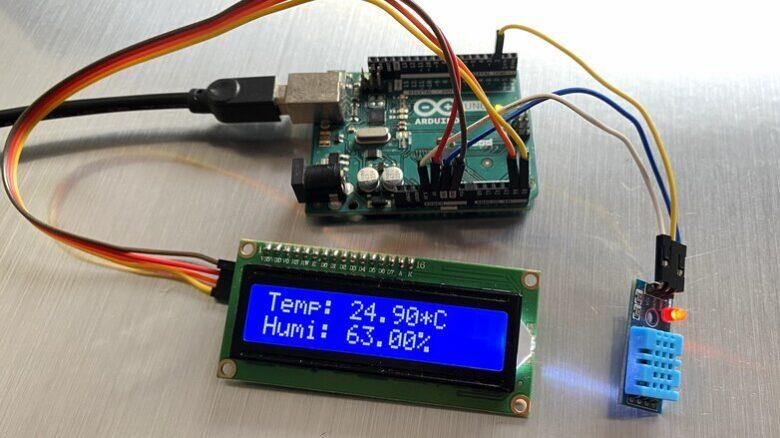
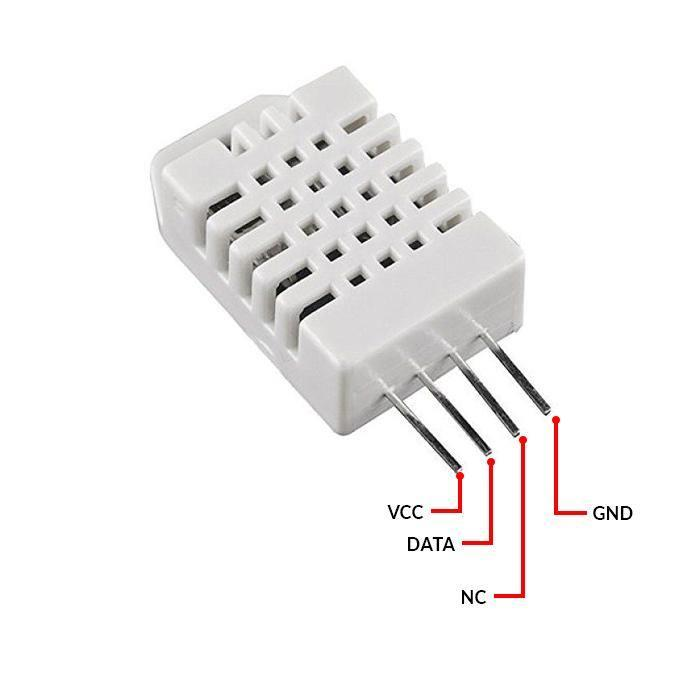
A Humidity Sensor measures the amount of water vapor present in the air. It provides information about relative humidity, helping systems understand atmospheric conditions.
Just as humans can feel the difference between humid and dry weather, a humidity sensor detects these changes electronically and sends the information to a microcontroller.
Applications of Humidity Sensors
- Weather monitoring stations
- HVAC systems
- Smart homes
- Greenhouse monitoring
- Environmental research
Advantages
- Accurate humidity measurement
- Low power consumption
- Easy Arduino integration
Environmental Sensors Guide: Soil Moisture Sensor

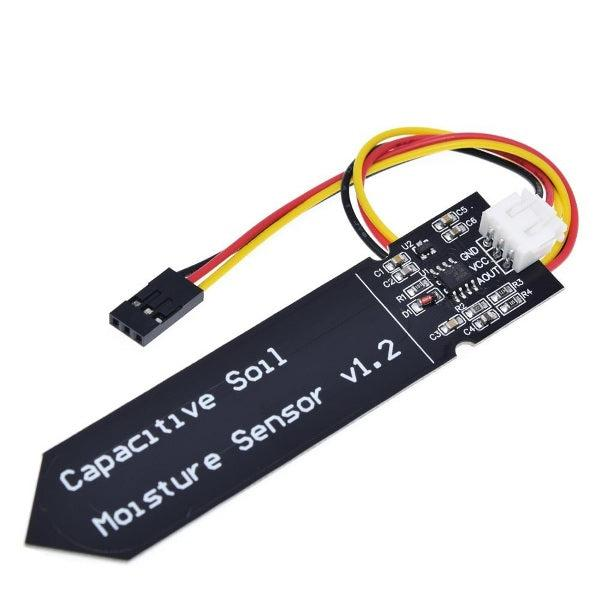
A Soil Moisture Sensor measures the amount of water present in soil. It is often called a plant’s best friend because it helps determine when watering is required.
There are two common types of soil moisture sensors:
1. Resistive Soil Moisture Sensor
This type uses two metal probes inserted into the soil. Moist soil conducts electricity better, while dry soil provides higher resistance.
2. Capacitive Soil Moisture Sensor
Capacitive sensors measure changes in capacitance caused by moisture content. They are more durable and resistant to corrosion.
Applications
- Smart irrigation systems
- Home gardening
- Agricultural automation
- Greenhouse management
Benefits
- Prevents overwatering
- Saves water
- Improves plant health
Environmental Sensors Guide: Water Level Sensor

A Water Level Sensor detects the height or depth of water in tanks, reservoirs, and containers.
Most water level sensors use conductive probes that detect water contact and generate electrical signals. These signals can be used to trigger alarms or automate water pumps.
Applications
- Water tank monitoring
- Automatic pump control
- Reservoir management
- Smart water conservation systems
Advantages
- Prevents overflow
- Reduces water wastage
- Supports automation
Environmental Sensors Guide: Sound Sensor
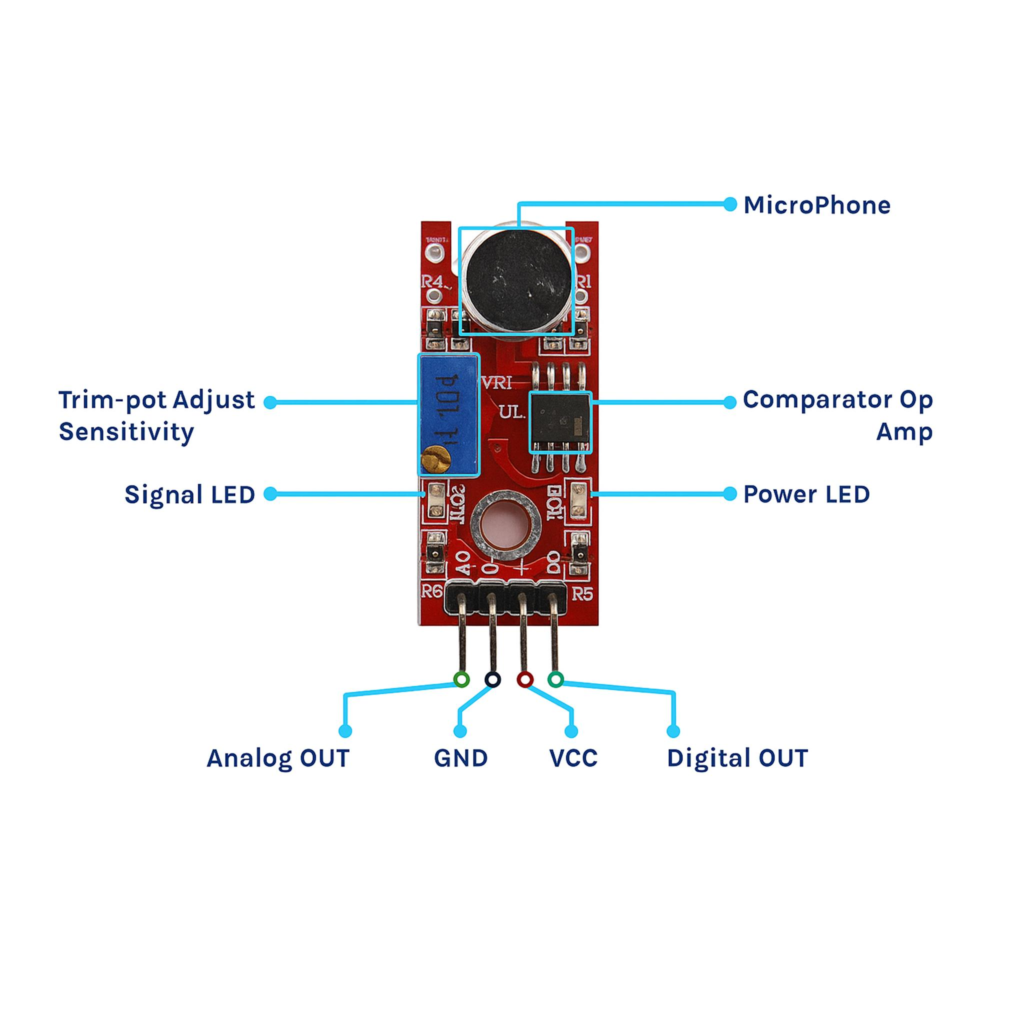
A Sound Sensor acts as the ear of an electronic system. It detects sound waves such as voices, music, claps, and environmental noise.
The sensor contains a microphone that converts sound vibrations into electrical signals. These signals can then be processed by Arduino for various applications.
Applications
- Clap-controlled devices
- Voice-activated systems
- Noise monitoring
- Security systems
Benefits
- Quick sound detection
- Easy programming
- Suitable for interactive projects
RoboSiddhi Learning Experience
These concepts were introduced during a RoboSiddhi electronics training session designed to help beginners understand environmental sensing technologies.
Students learned how humidity sensors measure atmospheric moisture, how soil moisture sensors help in agriculture, how water level sensors prevent overflow, and how sound sensors enable interactive electronics projects.
The practical demonstrations provided valuable insights into sensor operation and Arduino integration.
Practical YouTube Tutorial
Practical learning is one of the best ways to understand sensors.
Recommended topics to search on YouTube:
- Arduino Humidity Sensor Tutorial
- Soil Moisture Sensor Project
- Water Level Sensor Arduino Project
- Sound Sensor Arduino Tutorial
Watching hands-on demonstrations helps beginners understand wiring, coding, calibration, and troubleshooting techniques.
Real-World Applications
The Environmental Sensors Guide demonstrates how these sensors contribute to modern technology.
Smart Agriculture
Soil moisture sensors automate irrigation systems and improve crop management.
Home Automation
Humidity and sound sensors enhance smart home functionality.
Water Management
Water level sensors help conserve water and prevent overflow.
Environmental Monitoring
Humidity sensors provide important atmospheric data for weather analysis and research.
Conclusion
This Environmental Sensors Guide introduced four important sensors used in modern electronics and automation systems. Humidity sensors measure atmospheric moisture, soil moisture sensors monitor soil conditions, water level sensors track water levels, and sound sensors detect audio signals.
Together, these sensors enable smarter systems capable of monitoring, analyzing, and responding to environmental changes. Learning how these sensors work is an important step for anyone interested in Arduino, robotics, automation, and embedded systems.