
Have you ever wondered how your favorite gadgets produce sound, display information, or control power? Behind every electronic device lies a collection of amazing components working together like a team of superheroes.
In this lesson from RoboSiddhi, we explore five important electronic components that help modern gadgets function efficiently. These components may look small, but they perform powerful tasks that make electronics smarter, safer, and more useful.
Whether you’re a student, beginner, or STEM enthusiast, understanding these electronic components is a great step toward learning electronics.
Table of Contents
What Are Electronic Components?
Electronic components are the building blocks of every electronic device. Just like bricks are used to build a house, electronic components are combined to create gadgets such as mobile phones, computers, TVs, robots, and smart devices.
Each component has a special job. Some control electricity, some store energy, some create sound, and others display information.
In today’s lesson, we will learn about:
- Speaker
- Potentiometer
- Transformer
- Inductor
- LED Display
1. Speaker – The Voice of Electronics
A speaker is a component that converts electrical signals into sound.
Whenever you listen to music on your phone, watch a video on your TV, or hear a notification sound, a speaker is working behind the scenes.
Why Is a Speaker Important?
- Plays music and voice audio
- Produces gaming sound effects
- Allows communication through electronic devices
- Converts electrical signals into audible sound
Common Uses of Speakers
- Mobile phones
- Televisions
- Bluetooth speakers
- Computers
- Home theater systems
Think of a speaker as the voice box of electronics. Without it, devices would be completely silent.

Electronic Components for Beginners – Speaker used in electronic devices
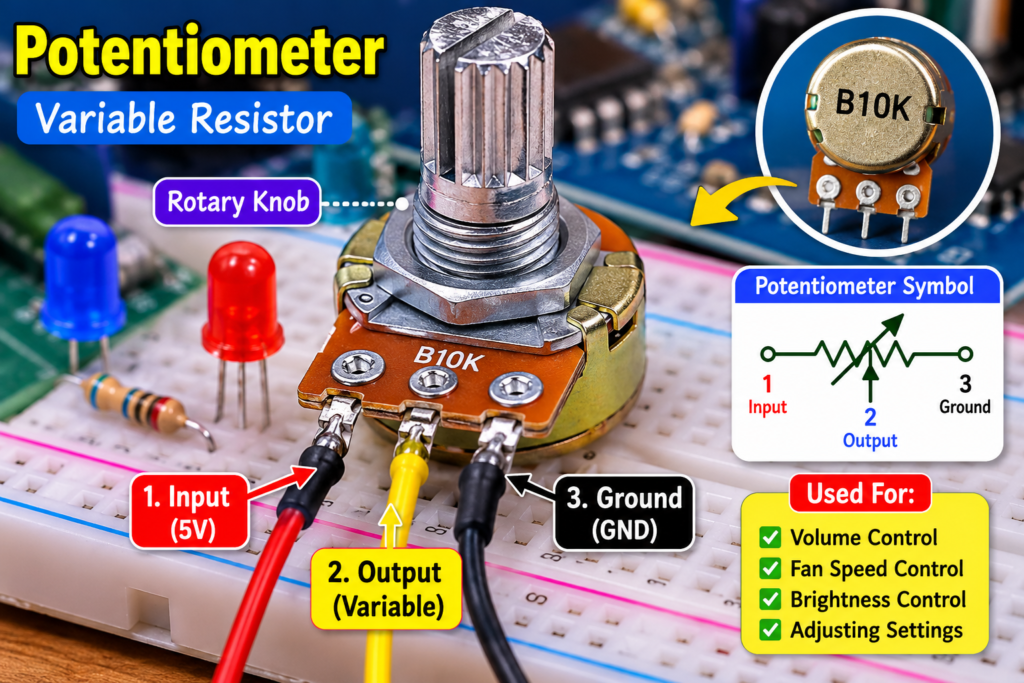
2. Potentiometer – The Volume Knob of Electricity
A potentiometer is a special type of resistor whose resistance can be adjusted by turning a knob.
It acts like a controller that allows you to increase or decrease electrical flow.
Super Power of a Potentiometer
- Controls brightness of lights
- Adjusts fan speed
- Controls volume in audio devices
- Provides precise electrical adjustments
Real-Life Examples
- Radio volume controls
- Fan regulators
- Light dimmers
- Audio mixers
A potentiometer is often called the volume knob of electricity because it allows users to control how much electricity passes through a circuit.
3. Transformer – The Electrical Elevator
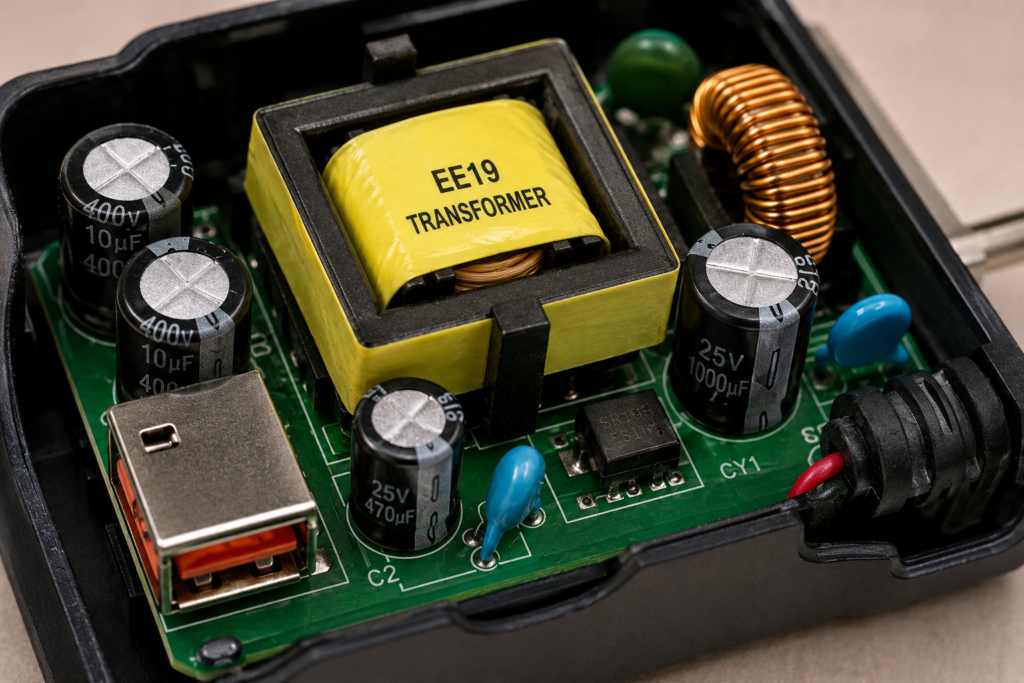
A transformer changes voltage levels to make electricity safe and useful for electronic devices.
Think of a transformer as an electrical elevator that moves voltage up or down depending on what a device needs.
Why Do We Need Transformers?
Electricity from power lines is often too high for electronic gadgets. Transformers reduce that voltage to safe levels.
Common Applications
- Mobile chargers
- Laptop adapters
- Home power supplies
- Electrical substations
How Does It Work?
A transformer contains:
- Primary Coil
- Secondary Coil
Electricity passing through these coils changes the voltage level.
Benefits
- Protects devices from damage
- Provides proper operating voltage
- Improves electrical safety
4. Inductor – The Energy Keeper
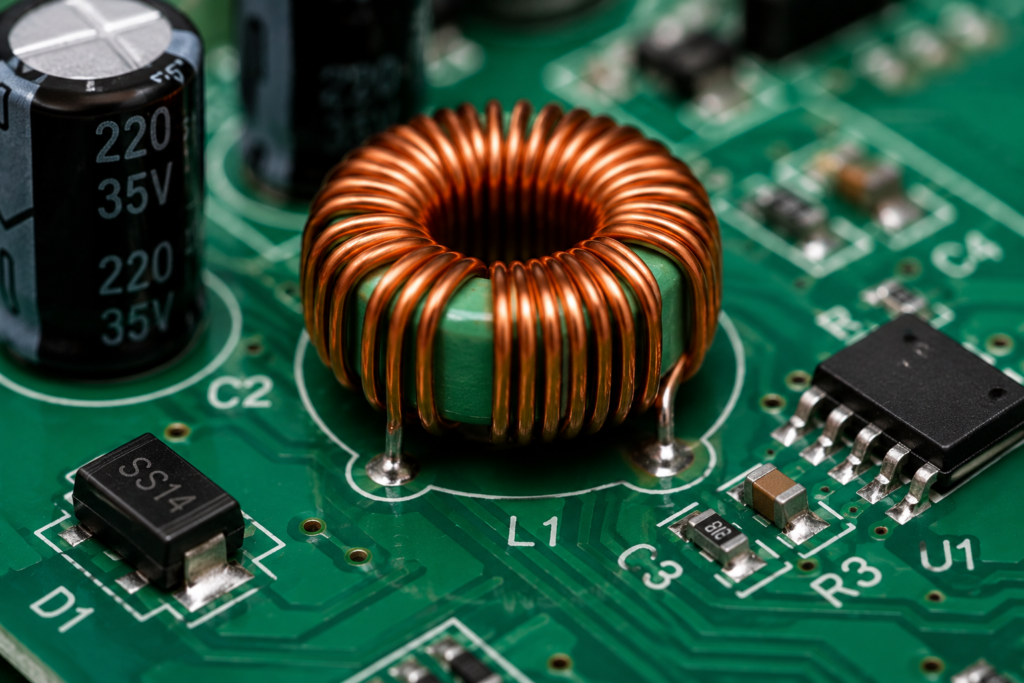
An inductor is a coil of wire that stores energy in the form of a magnetic field.
It acts like an energy keeper by holding energy temporarily and releasing it gradually when needed.
Why Are Inductors Important?
- Control sudden changes in current
- Smooth electrical flow
- Protect circuits from power fluctuations
- Improve efficiency of power supplies
Real-Life Uses
- Radios
- Power supplies
- Electronic filters
- Communication systems
Imagine an inductor as a spring that stores energy and releases it slowly to keep everything running smoothly.
5. LED Display – The Face of Electronics
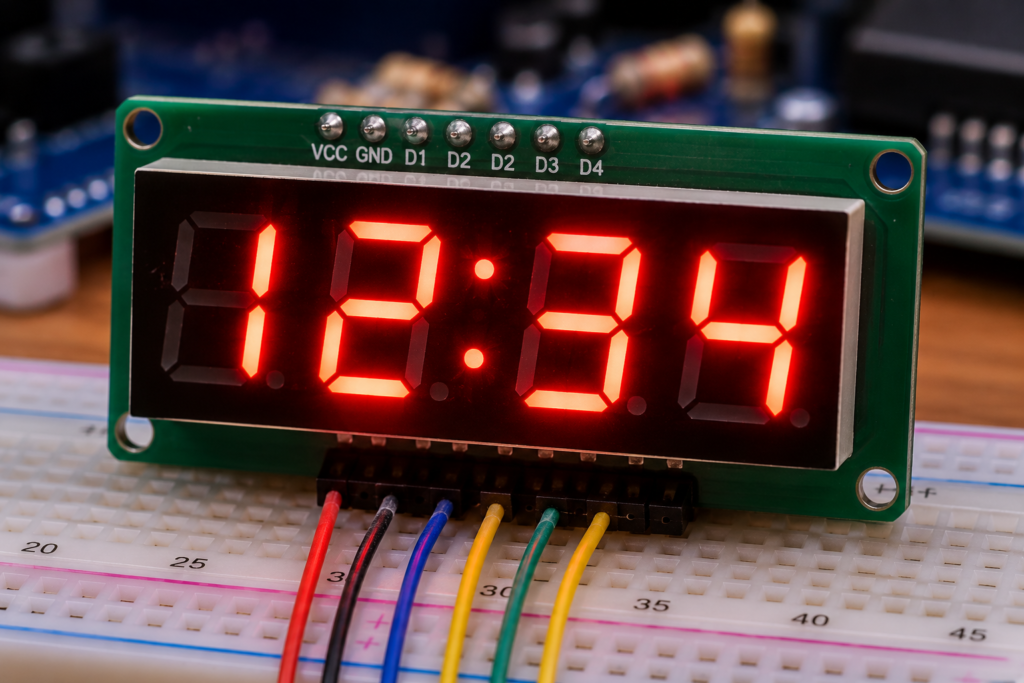
An LED Display is made up of many tiny LEDs that work together to show information such as numbers, letters, symbols, and images.
These displays help users interact with electronic devices easily.
Functions of LED Displays
- Show numbers and letters
- Display images and graphics
- Provide visual feedback
- Improve user experience
Where Can You Find LED Displays?
- Mobile phones
- Laptops
- Calculators
- Digital clocks
- Sports scoreboards
Without LED displays, it would be difficult to see information from electronic devices.
Summary Table
| Component | Function | Common Uses |
|---|---|---|
| Speaker | Converts electrical signals into sound | TVs, Mobiles, Bluetooth Speakers |
| Potentiometer | Controls electrical flow | Fan Regulators, Volume Controls |
| Transformer | Changes voltage levels | Chargers, Power Supplies |
| Inductor | Stores energy magnetically | Radios, Power Circuits |
| LED Display | Displays information visually | Mobiles, Clocks, Calculators |
Why These Components Matter
Every electronic device relies on multiple components working together.
- Speakers allow us to hear sounds.
- Potentiometers provide control over electrical settings.
- Transformers make electricity safe and usable.
- Inductors stabilize electrical flow.
- LED Displays help us see information clearly.
Understanding these components is one of the most important steps toward learning electronics and building innovative projects.
Learn Electronics with RoboSiddhi
At RoboSiddhi, students learn electronics, robotics, coding, AI, and STEM concepts through practical projects and interactive activities.
The goal is to make technology education simple, engaging, and accessible for learners of all ages. By understanding electronic components and their functions, students can build a strong foundation for future innovation and creativity.
Whether you want to build robots, create smart devices, or simply understand how gadgets work, learning electronics is the perfect place to start.
Watch the Video Tutorial
Watch the complete RoboSiddhi lesson to see these electronic components explained with real-world examples and demonstrations.
YouTube Video: Electronic Components for Beginners – Speaker, Potentiometer, Transformer, Inductor & LED Display
Final Thoughts
Electronic components may be small, but they perform incredibly important jobs inside modern devices. Speakers create sound, potentiometers provide control, transformers manage voltage, inductors regulate current, and LED displays show information.
Together, these components form the backbone of countless gadgets that we use every day. As you continue your electronics journey, understanding these fundamental parts will help you create exciting projects and become more confident in the world of technology.