
Introduction
The Arduino Rain Sensor Project is a simple and practical electronics project that helps students learn how weather monitoring systems work. Using an Arduino Uno and a rain sensor module, this project can detect the presence of rain and trigger actions such as alerts, automatic window closing, or irrigation control.
As part of STEM education, this project introduces beginners to sensor interfacing, Arduino programming, and automation concepts. It is ideal for school science exhibitions, robotics workshops, and IoT learning activities.
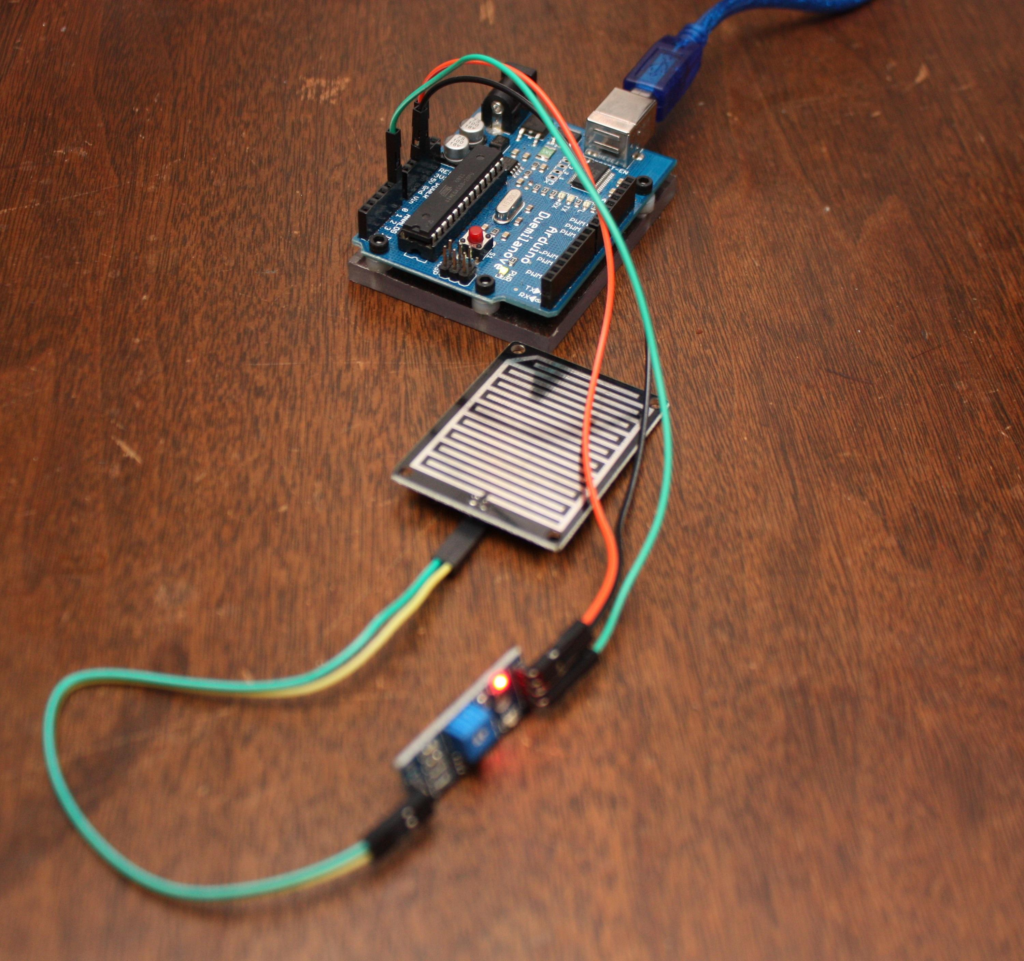
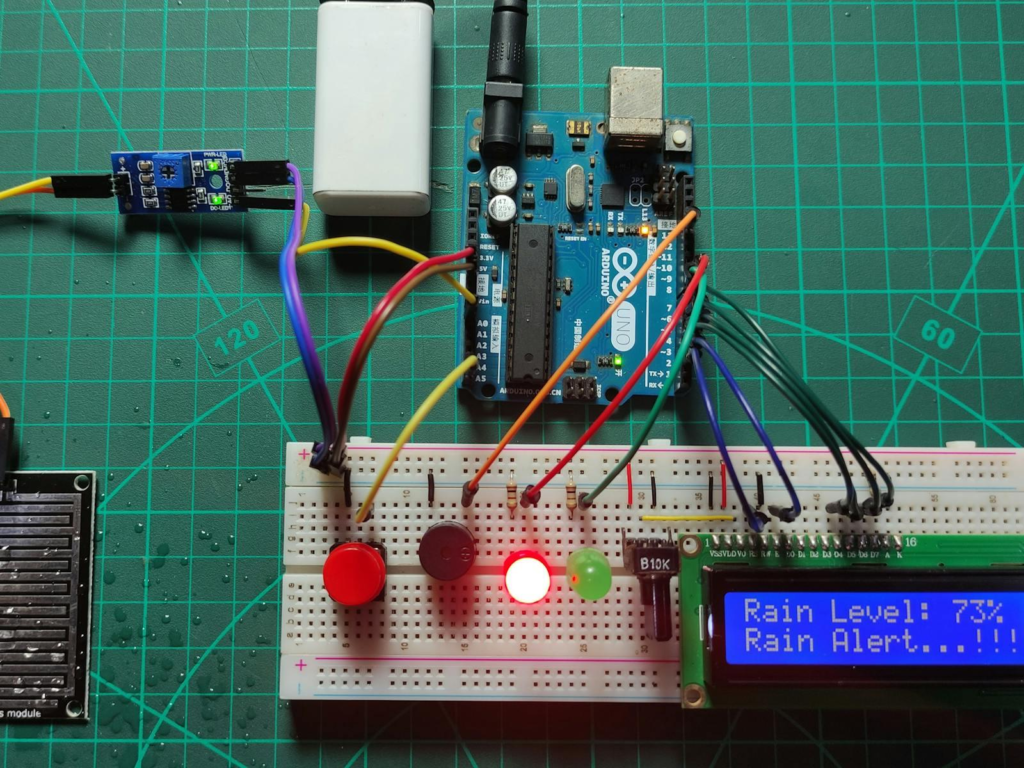
Table of Contents
What is an Arduino Rain Sensor Project?
An Arduino Rain Sensor Project is a weather-monitoring system that uses a rain sensor module to detect water droplets. When rain falls on the sensor plate, the sensor changes its output signal, which is read by the Arduino.
The Arduino then processes this information and can perform actions such as:
- Turning on an LED indicator
- Activating a buzzer alert
- Sending notifications
- Stopping irrigation systems
- Closing automated windows
This project demonstrates how sensors can be used to automate real-world systems.
Learning Objectives
By completing this project, students will learn:
- Arduino Programming
- Sensor Interfacing
- Weather Monitoring Systems
- Automation Concepts
- Digital Input and Output
- STEM Project Development
- Problem Solving Skills
- Basic IoT Concepts
Components Required
| Component | Quantity |
|---|---|
| Arduino Uno | 1 |
| Rain Sensor Module | 1 |
| LED | 1 |
| 220Ω Resistor | 1 |
| Breadboard | 1 |
| Jumper Wires | Several |
| USB Cable | 1 |
Working Principle
The rain sensor module contains conductive tracks that detect water droplets.
No Rain Condition
- Sensor surface remains dry.
- Output signal remains unchanged.
- LED stays OFF.
Rain Detected
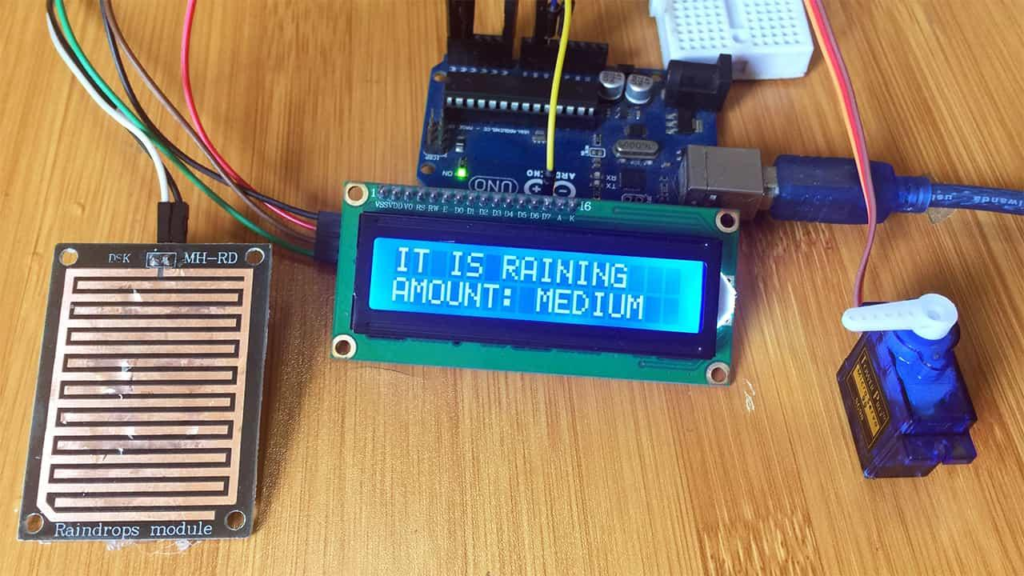
- Water creates conductivity between tracks.
- Sensor sends a signal to Arduino.
- Arduino activates the LED or alert system.
The system continuously monitors the sensor surface and responds instantly when rain is detected.
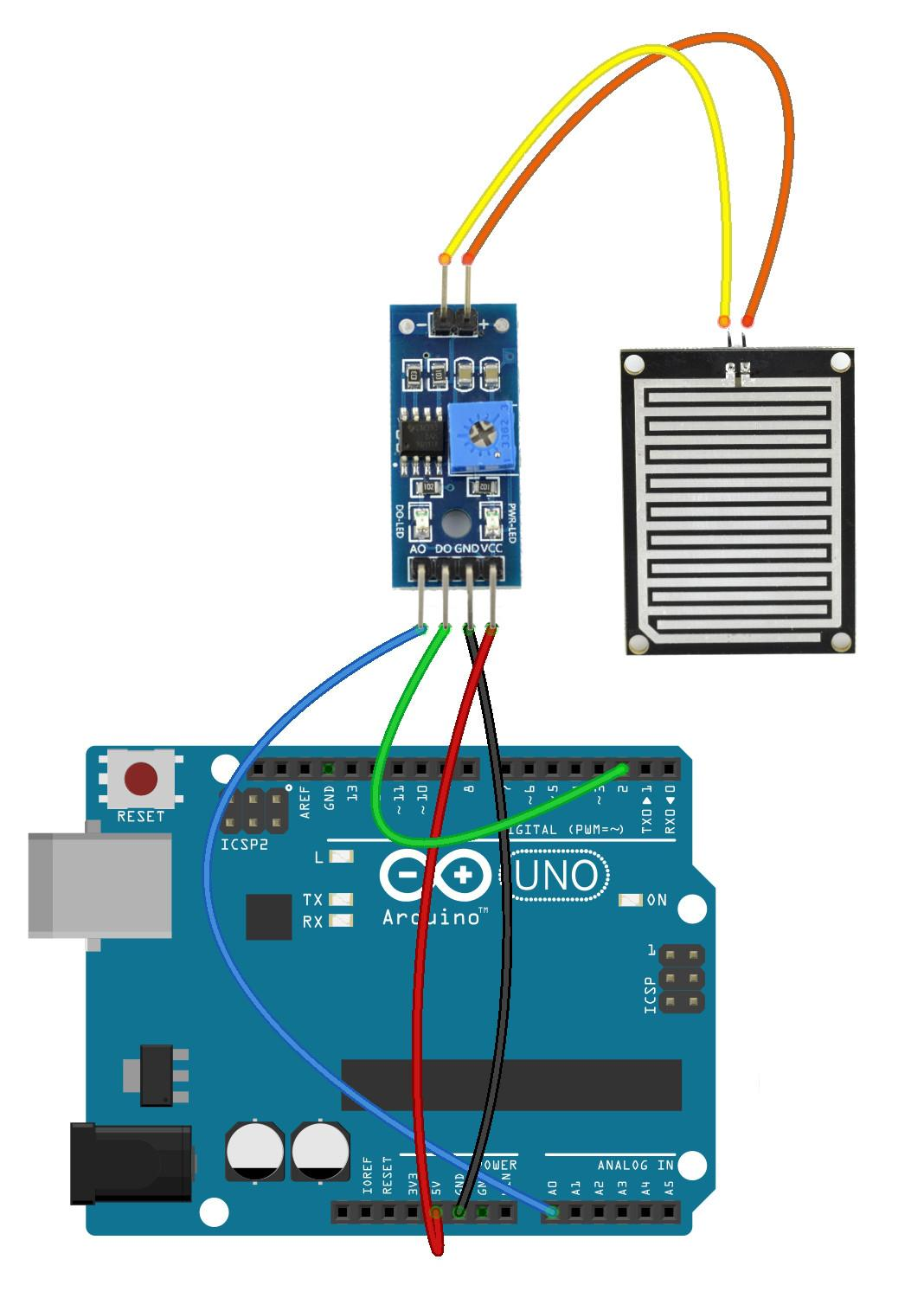
Circuit Connections
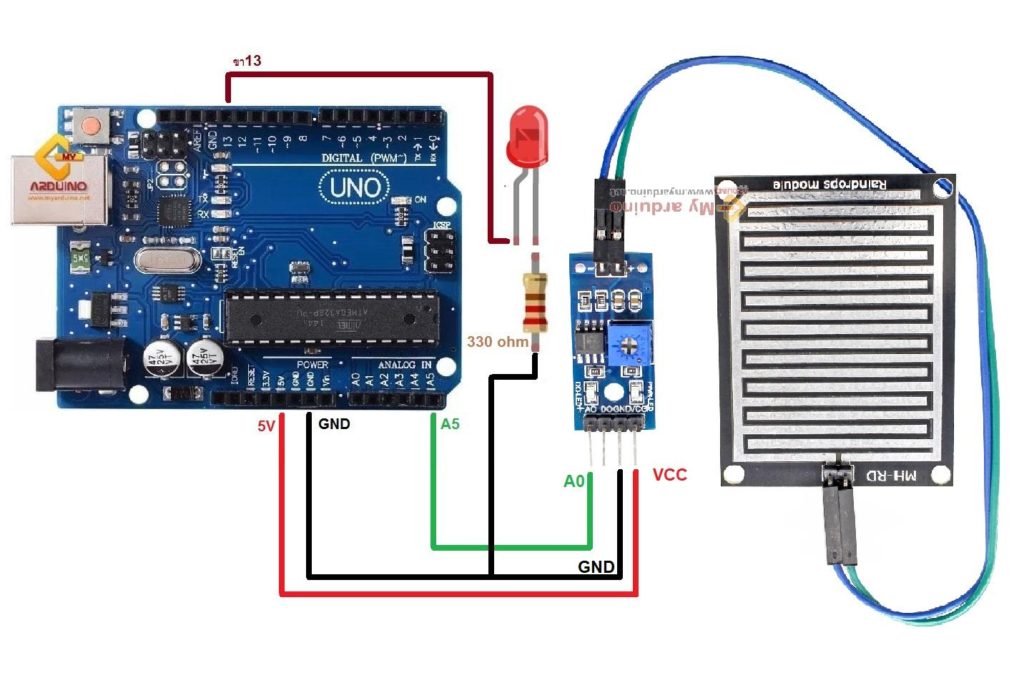
Rain Sensor Module
| Rain Sensor Pin | Arduino Pin |
|---|---|
| VCC | 5V |
| GND | GND |
| DO | Digital Pin 2 |
LED Connections
| LED Pin | Arduino Pin |
|---|---|
| Positive | Pin 13 |
| Negative | GND via 220Ω resistor |
Ensure all ground connections are common.
Project Algorithm
Step 1
Connect the rain sensor module to Arduino.
Step 2
Connect the LED indicator circuit.
Step 3
Initialize sensor and LED pins.
Step 4
Read the rain sensor value.
Step 5
Check whether rain is detected.
Step 6
Turn ON LED if rain is detected.
Step 7
Turn OFF LED if no rain is detected.
Step 8
Repeat continuously.
Arduino Rain Sensor Project Code
int rainSensor = 2;
int led = 13;

void setup()
{
  pinMode(rainSensor, INPUT);
  pinMode(led, OUTPUT);

  Serial.begin(9600);
}

void loop()
{
  int rain = digitalRead(rainSensor);

  if(rain == LOW)
  {
    digitalWrite(led, HIGH);
    Serial.println("Rain Detected");
  }
  else
  {
    digitalWrite(led, LOW);
    Serial.println("No Rain");
  }

  delay(500);
}
Code Explanation
Sensor Pin Definition
int rainSensor = 2;
Defines the rain sensor signal pin.
LED Pin Definition
int led = 13;
Defines the LED output pin.
Reading Sensor Data
digitalRead(rainSensor);
Reads the rain detection signal.
Rain Detection Condition
if(rain == LOW)
Checks whether water is detected on the sensor.
Alert Output
digitalWrite(led, HIGH);
Turns ON the LED when rain is detected.
Project Output
No Rain
No Rain
LED remains OFF.
Rain Detected
Rain Detected
LED turns ON.
The Serial Monitor displays the current status continuously.
Applications of Arduino Rain Sensor Project
Smart Irrigation Systems
Automatically stop watering during rainfall.
Automatic Window Control
Close windows when rain begins.
Weather Monitoring Stations
Collect environmental data.
Smart Home Systems
Integrate with home automation projects.
Agricultural Automation
Protect crops and optimize water usage.
IoT Projects
Send rain alerts to mobile devices or cloud platforms.
Future Scope
The Arduino Rain Sensor Project can be upgraded with advanced technologies such as:
- Wi-Fi-enabled ESP32 modules
- Mobile App Notifications
- Cloud Monitoring Systems
- Smart Agriculture Solutions
- Automated Roof Systems
- Weather Prediction Platforms
Students can expand this project into complete IoT-based weather monitoring systems.
Why Learn STEM with RoboSiddhi?
RoboSiddhi focuses on practical STEM education through hands-on projects and innovation.
Benefits of Learning with RoboSiddhi
- Project-Based Learning
- Arduino Programming Skills
- Robotics Education
- IoT Fundamentals
- Real-World Applications
- Creativity Development
- Future Technology Exposure
RoboSiddhi helps students transform theoretical knowledge into practical skills through engaging STEM activities.
Frequently Asked Questions
What does a rain sensor do?
A rain sensor detects water droplets and signals the Arduino when rain is present.
Is this project suitable for beginners?
Yes. It is one of the easiest Arduino projects for beginners.
Which Arduino board is used?
Arduino Uno is commonly used for this project.
Can this project be upgraded?
Yes. It can be integrated with IoT, mobile apps, and automation systems.
Where can this project be used?
It can be used in agriculture, weather stations, smart homes, and educational STEM projects.
YouTube Tutorial
Want to build this project step-by-step? Watch our complete video tutorial and follow along as we demonstrate the hardware setup, circuit connections, Arduino programming, and live rain detection testing.
What You Will Learn
- How a rain sensor module works
- Arduino rain sensor wiring connections
- Uploading code using Arduino IDE
- Detecting rainfall using Arduino
- Real-time rain monitoring system
- Practical applications of rain sensors
- STEM and IoT learning concepts
Why Watch the Tutorial?
The video tutorial provides a hands-on demonstration of the Arduino Rain Sensor Project, making it easier for beginners to understand sensor interfacing and automation concepts. By following the tutorial, students can successfully build their own rain detection system for school projects, science exhibitions, and STEM activities.
Watch the Complete Tutorial Here:
Conclusion
The Arduino Rain Sensor Project is an excellent beginner-friendly STEM activity that introduces students to weather sensing, automation, and Arduino programming. By detecting rainfall and triggering automated responses, the project demonstrates how sensors and microcontrollers work together in real-world applications.
As one of the most practical school-level electronics projects, it helps students develop technical skills, problem-solving abilities, and an understanding of automation systems while preparing them for future IoT and robotics innovations.