
Table of Contents
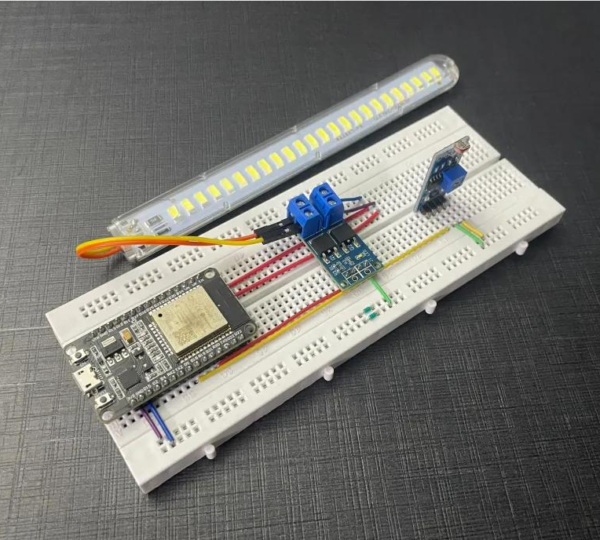
Technology has made our daily lives easier through automation. One common example is street lights that automatically turn ON at night and turn OFF during the day without human intervention. In this Fun Grade 8 STEM Activities project, students will learn how to create an Automatic Night Lamp Using ESP32 and LDR. This project combines electronics, programming, and sensor technology to build a smart lighting system that responds to surrounding light conditions.
The project uses an ESP32 microcontroller, an LDR (Light Dependent Resistor), and an LED. The LDR senses the amount of light in the environment and sends information to the ESP32. Based on the detected light intensity, the ESP32 decides whether the LED should turn ON or OFF. This simple yet powerful project introduces students to the fundamentals of automation, sensors, and embedded programming.
What is an Automatic Night Lamp Using ESP32 and LDR?
An automatic night lamp is a lighting system that turns ON automatically when it becomes dark and switches OFF when sufficient light is available. Such systems are commonly used in:
- Street lights
- Garden lighting
- Parking areas
- Home entrances
- Security lighting systems
The main purpose is to save electricity and eliminate the need for manual switching.
Components Required
To build the Automatic Night Lamp Using ESP32 and LDR, the following components are required:
- ESP32 Development Board
- LDR (Light Dependent Resistor)
- LED
- Resistors
- Breadboard
- Jumper Wires
- USB Cable
- Laptop with Arduino IDE Installed
These components are affordable and commonly used in beginner electronics projects.
Understanding the ESP32
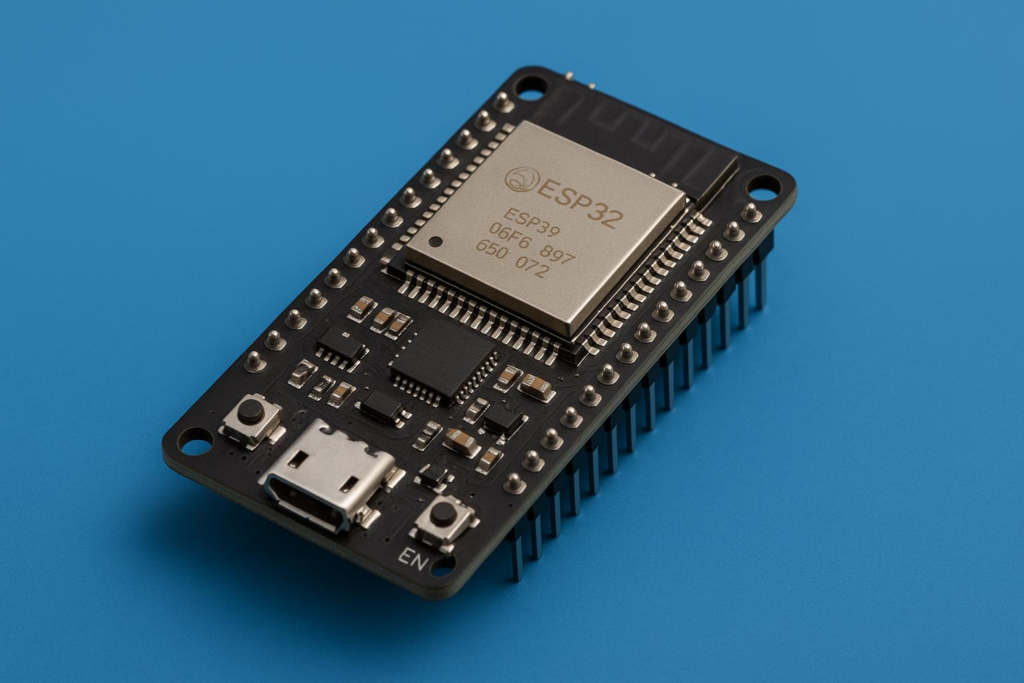
The ESP32 is a powerful microcontroller widely used in IoT and automation projects. It provides:
- Multiple GPIO pins
- Analog input support
- Digital output support
- Wi-Fi and Bluetooth connectivity
- Fast processing capabilities
In this project, the ESP32 reads data from the LDR and controls the LED accordingly.
What is an LDR?
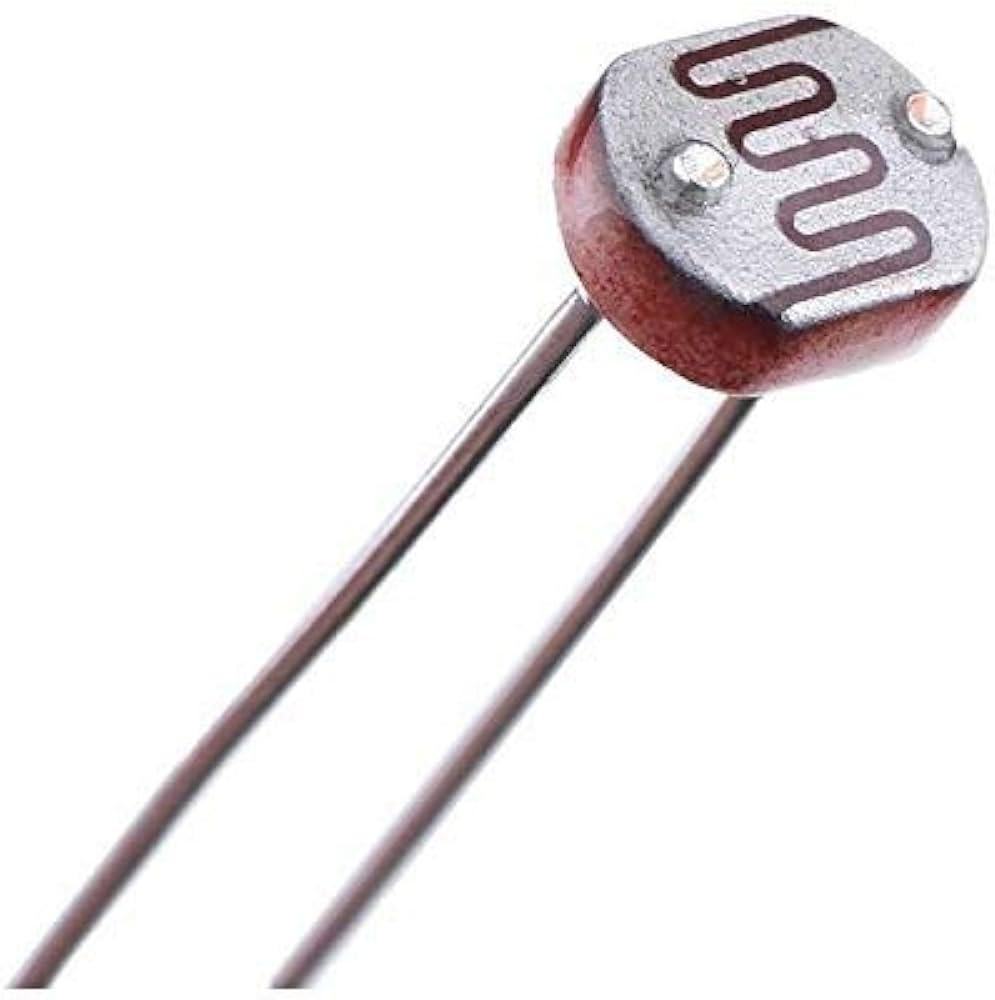
LDR stands for Light Dependent Resistor. It is a sensor whose resistance changes according to the amount of light falling on it.
Characteristics of an LDR
- High light intensity → Low resistance
- Low light intensity → High resistance
- Works as a photoresistor
- Used in automatic lighting systems
The LDR helps the ESP32 determine whether it is day or night.
How Does the LDR Work?
The working principle of an LDR is based on photoconductivity.
The LDR contains a photosensitive material called Cadmium Sulfide (CdS). When light falls on the surface:
- Photons strike the CdS material.
- Electrons become energized.
- More free electrons are produced.
- Electrical conductivity increases.
- Resistance decreases.
When the surrounding light decreases:
- Fewer photons hit the sensor.
- Fewer electrons become active.
- Conductivity decreases.
- Resistance increases.
This change in resistance is measured by the ESP32 and used to control the LED.
Circuit Connections of Automatic Night Lamp Using ESP32 and LDR
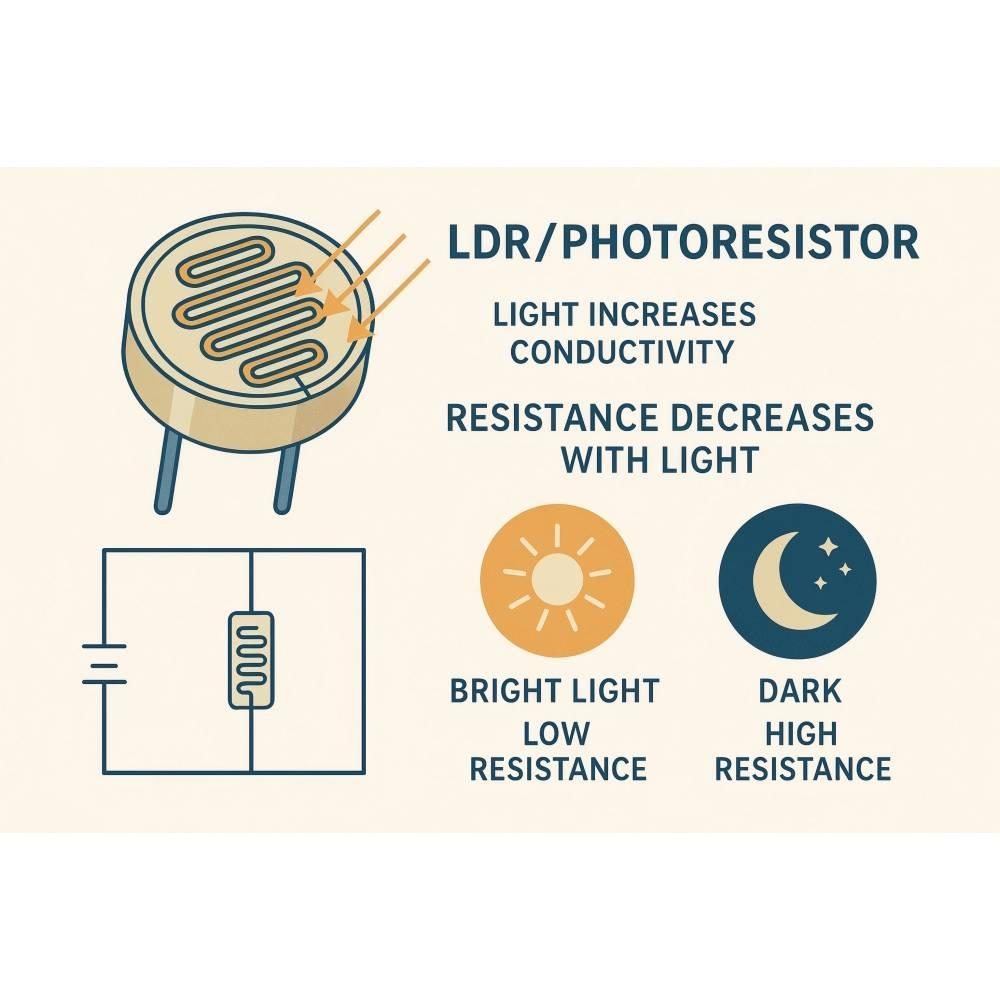
The Automatic Night Lamp Using ESP32 and LDR project uses a simple voltage divider circuit.
LDR Connections
| LDR Terminal | Connection |
|---|---|
| Terminal 1 | GPIO 34 |
| Terminal 2 | 5V Supply |
Resistor Connection
| Component | Connection |
|---|---|
| Resistor | Between GPIO 34 junction and GND |
LED Connections
| LED Terminal | Connection |
|---|---|
| Anode (+) | GPIO 25 |
| Cathode (-) | GND through resistor |
Complete Pin Mapping
| Component | ESP32 Pin |
|---|---|
| LDR Input | GPIO 34 |
| LED Output | GPIO 25 |
| Power | 5V |
| Ground | GND |
Working Principle of the Project
The ESP32 continuously reads the analog value coming from the LDR.
The sensor value changes depending on the amount of light in the environment.
Bright Environment
When there is sufficient light:
- LDR resistance decreases.
- Sensor reading becomes higher.
- ESP32 detects daylight conditions.
- LED remains OFF.
Dark Environment
When the surroundings become dark:
- LDR resistance increases.
- Sensor reading changes.
- ESP32 detects night conditions.
- LED turns ON automatically.
This behavior makes the system function as a smart night lamp.
Programming Logic
The program starts by defining the pins connected to the LDR and LED.
Setup Function
Inside the setup function:
- Serial communication is started.
- LED pin is configured as OUTPUT.
- Initial settings are applied.
Loop Function
The loop function continuously performs three tasks:
- Read LDR sensor value.
- Compare it with a threshold value.
- Control LED accordingly.
The threshold value used in this project is approximately 25500.
Decision Logic
If LDR Value > 25500
- Environment is bright.
- LED remains OFF.
If LDR Value < 25500
- Environment is dark.
- LED turns ON.
This simple if-else logic creates the automatic night lamp behavior.
Testing the Project
After completing the circuit and uploading the code:
Daylight Test
Expose the LDR to a bright light source.
Expected Result:
- LED remains OFF.
Night Mode Test
Cover the LDR with your hand or place it in a dark area.
Expected Result:
- LED turns ON automatically.
Torch Light Test
Shine a flashlight on the LDR.
Expected Result:
- LED turns OFF immediately.
These tests confirm that the system is responding correctly to changing light conditions.
Real-World Applications
The Automatic Night Lamp Using ESP32 and LDR project has many practical applications:
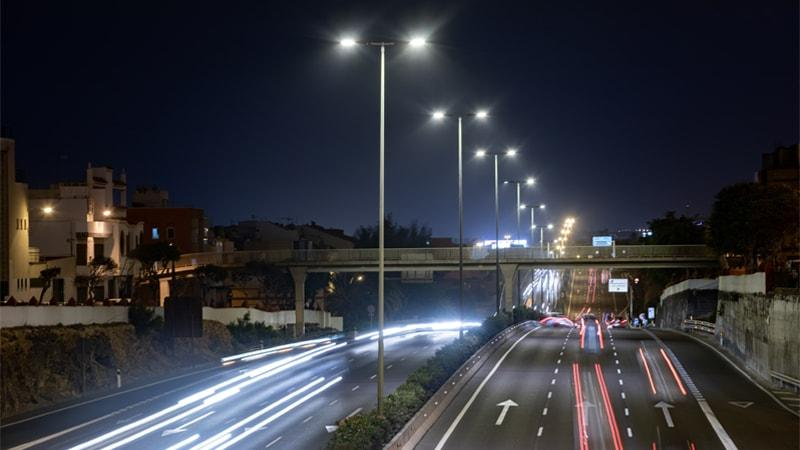
Smart Street Lights
Street lights can automatically operate without human intervention.
Garden Lighting
Garden lights can switch ON after sunset and OFF during sunrise.
Home Automation
Lights can automatically respond to environmental lighting conditions.
Security Systems
Outdoor lights can improve visibility and security during nighttime.
Energy Saving Systems
Automatic switching helps reduce unnecessary electricity consumption.
Learning Outcomes
This Grade 8 STEM Activities project helps students learn:
- Basics of ESP32 programming
- Sensor interfacing techniques
- Analog signal reading
- Digital output control
- Photoconductivity concepts
- Voltage divider circuits
- Automation system design
- Real-world IoT applications
Students gain hands-on experience in combining hardware and software to solve practical problems.
Why Choose RoboSiddhi for STEM Learning?
At RoboSiddhi, students learn through project-based STEM education that combines robotics, coding, electronics, and innovation. Projects like Automatic Night Lamp Using ESP32 and LDR help learners understand real-world technology through practical experimentation.
RoboSiddhi’s STEM programs focus on:
- Robotics and Automation
- Arduino Programming
- ESP32 and IoT Development
- Artificial Intelligence Basics
- Electronics Prototyping
- Innovation and Problem Solving
- Hands-on Learning Activities
These activities encourage creativity, critical thinking, and technical skills that prepare students for future technologies.
Conclusion
The Automatic Night Lamp Using ESP32 and LDR is an excellent beginner-friendly automation project for students. By combining an LDR sensor, ESP32 microcontroller, and LED, learners can create a smart lighting system that automatically responds to environmental light conditions.
This Fun Grade 8 STEM Activities project introduces important concepts such as photoconductivity, sensor interfacing, analog input processing, and automation. Beyond being a simple educational activity, it demonstrates how modern smart systems work in real-life applications such as street lights, garden lights, and home automation solutions.
Through projects like this, students develop valuable STEM skills while exploring the exciting world of electronics, coding, and automation.