
Introduction to STEM Education
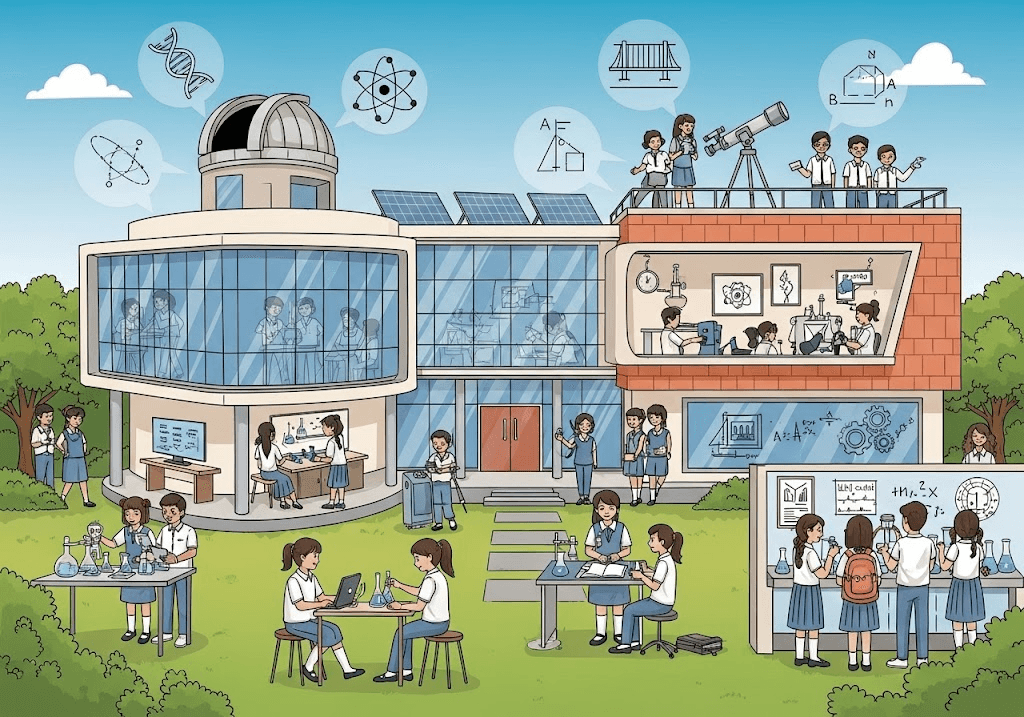
STEM education, an acronym that stands for Science, Technology, Engineering, and Mathematics, encompasses a broad range of disciplines that are essential for understanding and engaging with the world. This educational approach integrates these four critical areas, encouraging students to employ a holistic perspective as they solve complex problems. As society continues to evolve with rapid technological advancements, the importance of STEM education has become increasingly pronounced in preparing the workforce of the future.
A strong foundation in STEM is vital for students, as it fosters critical thinking, creativity, and problem-solving skills. By engaging with STEM subjects, learners develop the ability to analyze situations rigorously, think innovatively, and devise effective solutions to real-world challenges. Such skills are invaluable not only in specific STEM careers but across various fields, promoting versatility and adaptability in an ever-changing job market.
The global trend towards STEM education reflects a conscious effort among educators and policymakers to adapt curricula to suit contemporary demands. Countries worldwide recognize the necessity for a population that is proficient in science and technology, leading to significant investments in STEM programs and initiatives. This movement acknowledges that the future economy will rely heavily on skilled professionals in these fields and that early exposure to STEM concepts can ignite students’ interest and ambition.
As nations adapt to technological changes and strive for innovation, STEM education serves as a crucial tool in equipping students with the knowledge and skills necessary for success. Recognizing the impact of this educational approach is essential for fostering a new generation of thinkers and creators who can not only navigate but also shape the future landscape of our global society.
The Current State of STEM Education in India
STEM education in India has become a focal point for policy makers, educators, and stakeholders in recent years. Its significance lies in the ability to foster analytical thinking, problem-solving skills, and innovative capabilities necessary for the contemporary workforce. However, the landscape of STEM education in India is characterized by notable challenges and disparities. A significant portion of the population faces barriers in accessing quality educational resources, which adversely affects the overall development of STEM-based competencies among students.
According to recent statistics, while there has been an increase in enrollment in STEM programs at higher education levels, the quality of education and infrastructure remains inconsistent. Reports indicate that more than 30% of rural schools lack basic amenities such as electricity and laboratories, which are crucial for a hands-on STEM learning experience. Moreover, urban schools, despite having better facilities, often face overcrowding, leading to a compromised learning environment. The disparities in access to adequate resources create a significant divide in STEM education, essentially limiting opportunities for underprivileged students.
The lack of trained educators further complicates the situation. Many teachers find themselves inadequately prepared to impart STEM-related knowledge effectively, primarily due to a deficiency in professional development programs and training resources. This gap has led to a scenario where students receive less stimulating and engaging education, therefore diminishing their interest in STEM subjects. However, there is a silver lining; various initiatives, both governmental and non-governmental, aim to enhance STEM education, focusing on teacher training and curriculum development.
In conclusion, while STEM education in India faces numerous challenges, such as access inequalities and insufficient resources, it also presents unique opportunities for growth and improvement. Addressing these issues holistically can pave the way for a more inclusive and effective educational framework that aligns with the aspirations of the National Education Policy (NEP) 2020.
Introduction to NEP 2020
The National Education Policy (NEP) 2020 represents a transformative approach to education in India, marking a significant shift from traditional learning paradigms to a more holistic and multidisciplinary framework. Formulated by the Ministry of Education, NEP 2020 aims to provide an inclusive and flexible education system, tailored to meet the diverse needs of India’s population. The core principles of this policy focus on accessibility, equity, quality, and affordability, ensuring that education becomes a bridge for socio-economic advancement across all strata of society.
One of the primary objectives of NEP 2020 is to revamp the curricular structure by introducing a multi-layered educational framework. This framework advocates for skill development through integrated learning, encouraging students to engage in subjects that foster innovative thinking and practical skills. The policy promotes the introduction of coding, mental math, and vocational training at an early stage, thereby aiming to cultivate a workforce that is both skilled and proficient in various domains. By emphasizing STEM (Science, Technology, Engineering, and Mathematics) education, NEP 2020 aspires to prepare students for future job markets characterized by rapid technological advancements.
Moreover, NEP 2020 places a significant emphasis on the holistic development of students, steering away from rote memorization towards an education that nurtures critical thinking and creativity. The vision behind this policy encapsulates the aspiration to build a robust educational framework that not only amplifies academic excellence but also nurtures emotional and ethical values among students. Expected outcomes include enhanced employability for graduates, increased student engagement, and the fostering of a culture of innovation in educational practices. Together, these initiatives aim to reshape India’s educational landscape into one that adequately prepares learners for the demands of the 21st century.
How NEP 2020 Supports STEM Education
The National Education Policy (NEP) 2020 is a transformative framework aimed at overhauling India’s educational system, with a strong focus on fostering Science, Technology, Engineering, and Mathematics (STEM) education. One of the key provisions of NEP 2020 is the emphasis on curricular reforms that enhance STEM learning. The policy advocates for a more integrated approach to education, breaking down traditional subject silos and encouraging students to explore the interconnectedness of various disciplines. This reform allows for a more holistic understanding of STEM fields, making learning more relevant and applicable to real-world challenges.
Moreover, NEP 2020 promotes project-based learning, which is pivotal for effective STEM education. By engaging students in hands-on projects, the policy encourages critical thinking and problem-solving skills essential for success in STEM careers. Project-based learning not only enhances theoretical knowledge but also aids in the practical application of scientific principles, fostering innovation and creativity among students. As a result, students are better equipped to confront complex challenges and devise effective solutions, which is a cornerstone of STEM education.
Furthermore, NEP 2020 emphasizes the importance of partnerships with industries and research institutions. Such collaborations can significantly enhance STEM education by providing students with exposure to cutting-edge technology and real-world practices. Through internships, workshops, and field projects, students gain invaluable insights into the workings of various industries, making them more adept and employable in the competitive job market. In essence, NEP 2020 aims to create a dynamic educational ecosystem that not only supports STEM learning but also inspires a generation of innovative thinkers ready to contribute to India’s growth in science and technology.
Integration of Practical Learning in STEM through NEP 2020
Under the framework of the National Education Policy (NEP) 2020, there is a significant emphasis on integrating practical learning within the Science, Technology, Engineering, and Mathematics (STEM) disciplines. This approach seeks to bridge the gap between theoretical knowledge and real-world applications, fostering a more holistic educational experience. The inclusion of experiential learning is crucial, as it not only enhances students’ understanding of fundamental concepts but also prepares them for future challenges in their respective fields.
One of the core principles of NEP 2020 is to promote hands-on experiences through various methodologies, including internships, field projects, and collaborative learning. By engaging directly with the subject matter, students can develop critical thinking, problem-solving, and innovation skills that are essential for success in today’s dynamic workforce. For instance, numerous educational institutions across the country have started incorporating project-based learning, where students work on real-life problems, thereby applying their STEM knowledge practically.
Pilot projects have also emerged as effective implementations of this policy. For example, institutions have partnered with industry leaders to create internship programs that expose students to actual workplace environments. These programs not only benefit students by providing them with practical insights but also assist industries in identifying potential talent early. Additionally, community outreach programs that involve field projects allow students to engage with local challenges, applying their STEM skills to create impactful solutions.
Such initiatives unequivocally highlight the importance of practical learning in the educational landscape. By focusing on experiential education in STEM subjects, NEP 2020 is transforming the way students interact with knowledge, fostering a generation that is not only academically proficient but also adept at applying their skills meaningfully in various contexts.
Enhancing Teacher Training for Effective STEM Education
As India endeavors to implement the National Education Policy (NEP) 2020, the enhancement of teacher training plays a pivotal role in the successful integration of STEM education. Effective STEM education relies heavily on well-prepared educators who can deliver content that is not only engaging but also relevant to real-world applications. Current training programs, while beneficial, often lack focus on the interdisciplinary approach that STEM embodies. Therefore, reforming these programs to embed STEM principles is essential.
One of the main areas that require attention is the continuous professional development of teachers. Education is an evolving field, particularly in subjects like science, technology, engineering, and mathematics, where innovations are constantly emerging. Professional development workshops and courses should be offered regularly, incorporating the latest advancements in STEM fields. These sessions should not only focus on content knowledge but also on innovative pedagogical approaches that encourage critical thinking, problem-solving, and creativity among students.
Furthermore, innovative strategies must be employed to resource teachers effectively. Utilizing technology as a tool for training can offer educators flexible and diverse learning experiences. Platforms that allow educators to collaborate and share best practices can foster a community of continuous learning. For example, virtual simulations and interactive learning modules can enhance teachers’ understanding of complex concepts and teaching methodologies.
Additionally, partnerships with industry experts can provide insights into current trends and necessary skills for future job markets, bridging the gap between education and employability. Such collaborations can also lead to mentorship programs, where educators gain guidance and support from experienced professionals in STEM fields.
In conclusion, enhancing teacher training is a critical component in the effective implementation of STEM education as outlined in NEP 2020. By investing in comprehensive professional development and innovative training strategies, educators will be equipped to foster a new generation of skilled thinkers and problem solvers in India.
The Role of Technology in Advancing STEM Education
The advent of technology has profoundly transformed various sectors, and education is no exception. Within the framework of the National Education Policy (NEP) 2020, technology serves as a pivotal force in advancing STEM education across India. The potential of digital tools, online resources, and virtual laboratories is instrumental in providing equitable access to quality education, particularly in remote and underserved areas.
With NEP 2020 emphasizing the integration of innovative teaching methods, digital tools play a crucial role in achieving this goal. Online resources, such as video tutorials and interactive simulations, enhance the learning experience for students in STEM disciplines by providing diverse approaches to complex concepts. These resources are not bound by geographical constraints; thus, students from rural backgrounds can benefit from high-quality curriculum materials that were traditionally inaccessible.
Moreover, virtual labs offer students an opportunity to engage in experiments and practical applications of their theoretical knowledge without the need for physical lab equipment. These online platforms create a safe and controlled environment for students to explore, test hypotheses, and draw conclusions, promoting experiential learning vital for STEM education. This shift towards virtual experiential learning aligns seamlessly with NEP 2020’s vision of fostering critical thinking and problem-solving skills among learners.
However, to realize the full potential of technology in advancing STEM education, there remains a pressing need to enhance digital infrastructure in schools. This entails providing reliable internet access, modern computing devices, and adequate training for educators to effectively incorporate technology into their teaching practices. By investing in these areas, the government and educational institutions can ensure that the benefits of technology are widespread, thus fostering an inclusive and progressive educational environment.
Equity and Inclusion in STEM Education
Equity and inclusion in STEM education are critical for fostering a diverse and innovative workforce that reflects the broad spectrum of society. The National Education Policy (NEP) 2020 outlines a strategic framework aimed at bridging the gaps that exist for underrepresented groups, including girls and marginalized communities, in the fields of Science, Technology, Engineering, and Mathematics (STEM). This initiative marks a pivotal moment for India’s educational landscape, emphasizing the importance of equal access and opportunity in STEM disciplines.
The NEP 2020 proposes a multi-faceted approach to enhance participation in STEM education by implementing targeted measures. One significant area of focus is the provision of scholarships specifically designed for underprivileged students. This financial support is essential in alleviating the economic barriers often faced by students from low-income backgrounds, allowing them to pursue higher education in STEM fields. By alleviating financial constraints, scholarships can empower students to envision and pursue careers in areas previously deemed inaccessible.
Additionally, mentorship programs play a crucial role in fostering inclusion within STEM education. Pairing students with mentors who have relevant expertise can provide guidance, encouragement, and inspiration. Mentorship fosters a sense of belonging, particularly among girls and underrepresented groups who may lack relatable role models in the STEM landscape. Engaging with industry professionals can facilitate knowledge transfer, enhance practical skills, and cultivate the confidence necessary for success in these fields.
Community engagement initiatives are equally important in promoting equity in STEM education. By involving local communities and stakeholders, educational institutions can create awareness about the significance of STEM careers and the pathways available to students. Collaborations with schools, NGOs, and industry partners can lead to workshops, seminars, and interactive sessions, which can inspire young minds to explore STEM subjects. Together, these strategies contribute to a more equitable and inclusive educational environment, ensuring that all individuals have the opportunity to thrive in STEM fields.
Conclusion: Future Prospects of STEM Education in India
As we reflect on the integral role of STEM education within the framework of the National Education Policy (NEP) 2020, it becomes evident that significant strides can be made towards enhancing the educational landscape in India. The NEP 2020 emphasizes a holistic and multidisciplinary approach to education, which is essential for the development of critical skills required in the 21st century. By promoting STEM disciplines, the policy not only addresses the immediate educational needs of students but also aligns with global trends in science, technology, engineering, and mathematics.
The potential impact of NEP 2020 on STEM education is profound. By prioritizing experiential learning, research, and innovation, the policy encourages students to engage with real-world challenges. This shift towards a more application-based learning environment is expected to foster creativity and problem-solving skills among learners. Furthermore, the emphasis on digital literacy and technological integration propels students towards becoming adept in the latest advancements, which is vital for their future careers in a rapidly evolving job market.
However, the journey to truly transform STEM education in India is one that requires continual evaluation and adaptation. Stakeholders, including educational institutions, the government, and industry leaders, must collaborate to monitor the implementation and impact of the NEP. This approach will not only help identify challenges and areas for improvement but also ensure that the reforms remain relevant to the needs of students and the nation. As education increasingly becomes a dynamic field shaped by societal changes and technological progress, a proactive stance towards policy review and optimization will be essential to maximize the benefits of STEM education for students and, ultimately, for India as a whole.